The Semi-Retired Foamer has been a railfan since he was around 5 years old, oh yes a very young age, an age when one really should avoid being involved with the gunzel community to any great extent. A few rather unsavoury people bringing that fact home.
After a few decades of train chasing, one decided to break with protocol and get married, thus leading to a severe cut in railfan activity.
Subsequent dealings with hate breeders, lunatics, mental defectives and self-appointed preservation overlords lead to an even greater decrease in my hobby participation.
However things have changed thanks to our small group of trusted mates, interest has returned, and now I have become a bit more involved yet again.
.
_
Over the years I have tried my best to further both the hobby, as well as the friendships that it brings. I have done this by setting up proactive groups both here in Australia, as well as the Philippines. It is with huge honour that I am often considered the founding father of the railfan hobby in the Philippines (my second home).
_
I don't take the hobby too seriously and I am a friend to anyone who is good and genuine. But never forgive those who have used their hate to destroy my hobby or hurt the friends within it.

Let's Make The Hobby Great Again!
I aim to share the era that I considered mine, the 80s and 90s. I also like to help promote, and even raise funds for, the various heritage societies that keep the era alive
_
**** LOCOMOTIVE/ PUBLICATIONS ****
-
We occasionally publish information on the locomotives, and rollingstock, from railways in Australia and the Philippines.
All are available for
FREE at our ALR WEBSITE.


Please email me should you wish to use anything from this site !


Showing posts with label Goodwin Alco. Show all posts

Thursday, October 9, 2025

FOR THE LOVE OF ALCO PT5


Howdy folks!

  Beware, you are approaching another selection of photography showcasing the Aussie product of the greatest locomotive manufacturer to ever exist*. Yes, it’s time once again to bask in the oily glory of Australian-built ALCo locomotives — the rumbling, smoke-belching beasts that are probably the only things, besides the good ol EE, that made railways worth photographing in the first place. Forget your whisper-quiet modern guff on wheels; this is the era when locomotives sounded like locomotives and smelt faintly of heaven (with a hint of unburnt diesel).
  Ohhhh that magical smell of a 44 braking heavily on a summers morning.....yummmmmm. Possibly marginally deranged as well.

Over the years, I’ve managed to chase, snap, and generally obsess (some would say unnaturally so) over these magnificent units across the country — from country branch lines to mainline freights, from the glory days to the “stored” era (which, let’s face it, mostly meant bollock all with their going on to get the chop chop). My camera has seen more ALCo exhaust plumes than sunsets, and I’ve probably spent more time loitering near level crossings than any balanced adult should admit to.

This collection represents years of persistence, missed shots, and the occasional angry magpie encounter — all in pursuit of that perfect photo of an 44, 45, or 48 class doing what they do best: looking heroic and deafening everything within a 5 km radius. Some might call it obsession; actually over the years most have, however I call it dedication. Or maybe denial. Either way, the results are here for your enjoyment (and my continued justification for owning far too many boxes of photos that are slowly being processed for an archive when I become a fetid corpse).

So, grab a drinkie, settle in, and enjoy another unapologetically noisy, smoke-filled stroll down the ALCo memory lane. Because while other manufacturers may have built locomotives, only ALCo (oh and English Electric) built legends.

If you have an interest in aviation and other guff, check out my

* In my humble opinion.
-----------------------------------------------
Semi-Retired Foamer!
Follow our page to be kept updated on everything
we inflict upon the internet.
---------------------------------------------------------


Above and below.
4834 shunts a grain hopper at Port Kembla (Inner Harbour).
Now scrapped.
Photos: Brad Peadon


A weekend visit to the Delec locomotive depot would guarantee you a colourful line up of 48 class amongst other ALCos and lesser units.
Of the above four, only 48153 still exists. Oh, and 42220 in the background, which is now FL220 with Watco in Western Australia.
Photo: Brad Peadon


4448 having a snooze at Port Kembla loco, down in the New South Wales Illawarra Region.
She was scrapped at Dunheved in 1995.
Photo: Brad Peadon


4822 and 4811 on a spoil train on the Illawarra line in Sydney.
Both have luckily survived, 4822 preserved at Dorrigo, with 4811 operational with Southern Shorthaul.
Photo: Brad Peadon


4816 sitting out the weekend at Delec locomotive depot in Sydney.
She would later go on to be part of the Austrac fleet, and now 'Junee Railway Workshops'.
Photo: Brad Peadon


Above and two below.
JL402 (ex 44206) had just been painted into the Freight Australia livery when we found her at Braemar.
26-3-2002
Photos: Brad Peadon


4878 4871 4870 4876 pass through the former station at Weston on the South Maitland Railway.
Alas coal trains have ceased on this historic line, the water tank remains, however the bridge I am on was demolished.
4878 became Graincorp GPU2 and is currently stored at Junee.
4871 was rebuilt as PL2, but has since been scrapped. As have the other two 48ers.
Photo: Brad Peadon


4898 sitting out the weekend at Delec Depot in Sydney.
She would later be repainted in Freightcorp Blue, but today is scrapped.
Photo: Brad Peadon


4861 4874 4862 4881 up coal at Maitland (High Street).
15-12-1990
All units now scrapped.
Photo: Brad Peadon


4839 4859 shunting the silos at Ariah Park.
4859 interestingly survives in a Junee paddock, privately owned by local stuntman Lawrence Legend who also has some buses.
4839 is another scrapped one.
Photo: Brad Peadon


4471 and 42220 on a limestone train approaching Moss Vale station.
4471 went on to be with a number of owners before Qube decided to scrap her.
42220 is with Watco in Western Australia as FL220.
Photo: Brad Peadon


JL401 (ex 44204) and JL402 (ex 44206) lead a Lachlan Valley Railfreight train through Jindalee (north of Cootamundra).
Both have reverted to their original numbers and are in service with Southern Shorthaul.
Photo: Brad Peadon


4520 midway through a repaint at the museum in Thirlmere.
Loco obviously preserved.
Photo: Brad Peadon


45s1 sits in the Chullora Workshops back in her day of wearing the attractive (not so much in this shot) Silverton livery.
Photo: Brad Peadon


Now scrapped PL5 and PL2 sitting in the yard at Morandoo.
The box still exists.
Photo: Brad Peadon


Above and below.
4830 and 4804, both heavily stripped and both gone to the big roundhouse in the sky.
Photo: Brad Peadon


4841 shunting around the Outer Harbour loop in Port Kembla.
Also scrapped.
Photo: Brad Peadon


4893 in Port Waratah.
Loco would see the Freightrail Blue livery, but has since been scrapped like most others.
Photo: Brad Peadon


4827 passes through Enfield with the AK Cars.
Photo: Brad Peadon


4866 4875 4860 shunting the silos at Maimuru on the now closed line from Demondrille to Cowra.
All now scrapped. At this point it's probably just easier to say which survive.
Photo: Brad Peadon


4821 sitting in Cootamundra yard.
She would be withdrawn in this livery, and then go on to be preserved at the Goulburn Roundhouse, still in this original livery. Along with 4822, the only two 48s to have worn the one livery all their lives and into preservation.
Photo: Brad Peadon


JL404 (ex 44209), in it's former R&H livery, leading now scrapped 1872 through Gelco in East Botany.
JL404 has reverted to it's original number and is now owned by the Manildra Group.
Photo: Brad Peadon


FL220 48145 4514 pass through East Botany with a rake of containers from Port Botany.
48145 has become Graincorp's 48213, while 4514, which at one stage was preserved, fell into the clutches of Pacific Nation who obviously scrapped it.
Photo: Brad Peadon

-----------------------------------------------------------------------


-----------------------------------------------------------------------

Bradly Coulter
The multitude of people with me on these trips.


New South Wales Premier Railway History Group


Check our new Linktree site above for piles of dreary transport and other entertainment.
-----------------------------------------------------------------------




Saturday, December 21, 2024

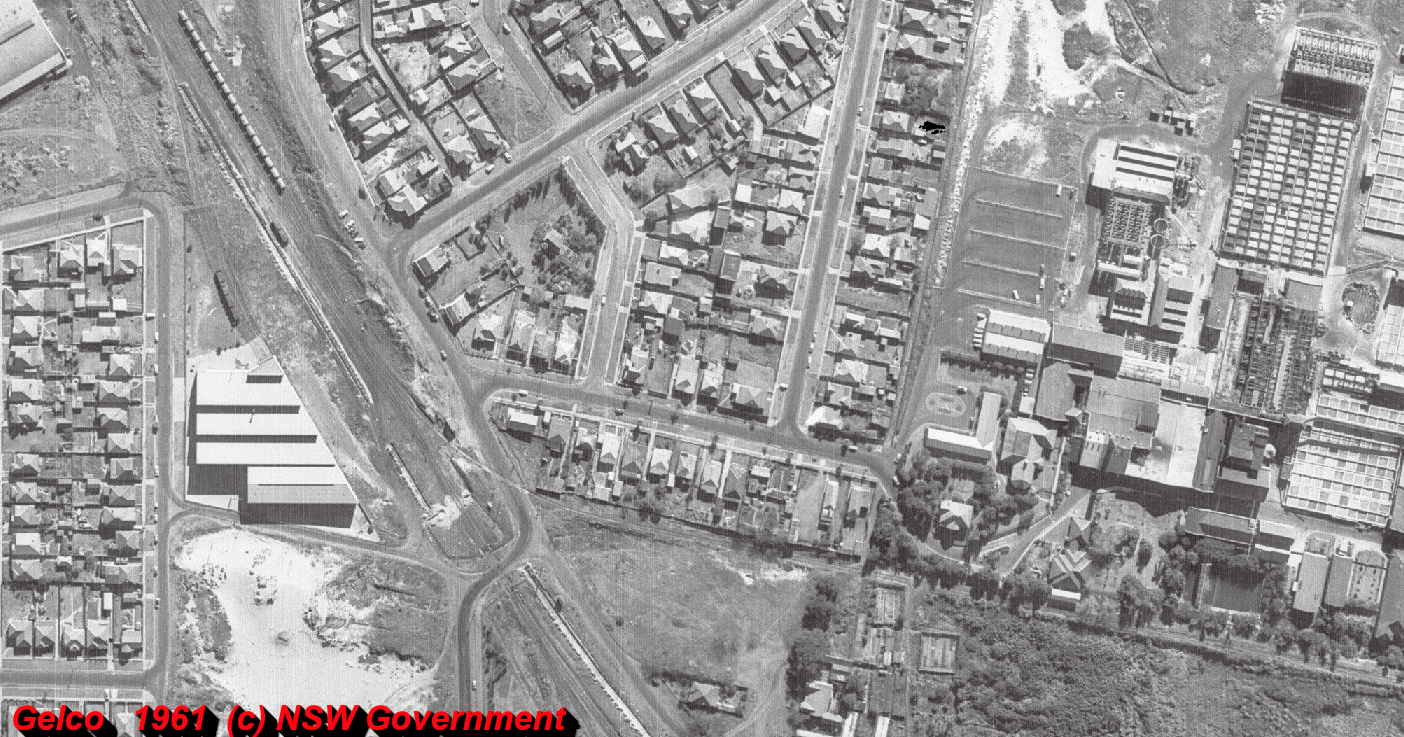
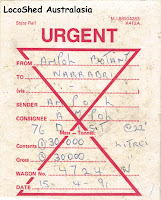
AMPOL - PAGEWOOD BRANCH - PART 1 - REVISED/ENLARGED


Article: Brad Peadon

 This article was originally written for the former 'The Smutter' ezine, but only ever saw the first part published. I have always felt that this branch had huge modelling potential at a rather cheap cost, it is also one for those who prefer collecting more model locomotives than rollingstock.
  I first put this three-part article together back in July 2019, coinciding with a plan to finally start a layout based on the line.
 I have decided to sit down, fix the horrid design, and add more content.
  As always, I would very much welcome any further information and photos related to the branch.
You can also find much more Botany line content on our Facebook forum.


Yellow: Former ICI branch which, while closing decades earlier, is still easier to make out when on location.

--------------------------------------------------------------------------------


When we first dream of building our own model railway empire - whether we’re young or well-advanced in years - many of us imagine cramming as much track as humanly possible onto the available board space.

This often leaves little room for trees, structures, or even the vaguest hint of reality. The result? Trains endlessly looping around, seemingly without rhyme or reason. While this might be entertaining for a while, the novelty tends to wear off quickly. Before long, you'll find yourself drifting back to internet forums, ready to stir up trouble again.

A wise - though delightfully cantankerous - modeller from the far-flung reaches of Wagga Wagga once shared a gem of advice with me: “More is not necessarily better.”

Now, I’ll admit, his actual words were probably far less polite (and unprintable), but the sentiment stuck with me. Painful as it is to acknowledge, this truth has shaped many of the changes I’ve made to my former Tinlow layout over the years.

  Long before this nugget of wisdom graced my ears, though, I had my sights set on a layout inspired by the now-defunct AMPOL branch line. This short stretch of track ran from the Gelco yard at Botany (Sydney) to the now obliterated AMPOL fuel terminal. With its minimal infrastructure and operational quirks, it struck me as the perfect layout for those who enjoy a surplus of locomotives with just a smattering of rollingstock to shuffle about.

Let’s kick off this epic journey with some photos of the line during its twilight years. Stay tuned, because in the coming days, the thrilling AMPOL saga continues!


AMPOL Terminal at the commencement of the refurbishment.
Photo: Brad Peadon


AMPOL Terminal during refurbishment with the sidings having been relaid.
Photo: Brad Peadon


Following refurbishment of the sidings in the 90s.
To the best of my knowledge, which really is not that great, the terminal has never used a rail-based shunter. This beast would be seen shunting the empties/loaded tankers around the small yard there, thus alleviating the need for a permanent shunting loco.
Photo: Brad Peadon


4910 44211 shunt the AMPOL terminal. Baker Street level crossing in the foreground.
Photo: David Xuereb


Not much effort needed for 4827 to push NTAF4037 fron Gelco to the terminal.
Ocean Street - Photo: David Xuereb


48100 pushing tankers over Ocean Street. 
Photo: David Xuereb


4851 about to pull out a rake of loaded tankers. 
Photo: David Xuereb


4910 44211 at the AMPOL Terminal.  
Both Photos: David Xuereb


44212 shunting the loading bays while the road-based shunter can be seen in the sidings to the left. There were two sidings curving behind that green wall (see part 3)
Photo: David Xuereb


Waiting to cross Ocean Street.  
Photo: David Xuereb


Shunter Steve protects Baker Street as 44212 leads loaded tankers 
out of the terminal.
Photo: Brad Peadon


Changing the points to allow 44211 access to the branch.
Photo: Brad Peadon


Thanks to former local, and lineside companion at Botany for many years, David Xuereb, for use of your photos. Many of which appear in this series.
David lived somewhat closer to the branch than I, so had a lot more opportunity to photograph the daily coming and going.
Hundreds more photos are gradually appearing on our Botany Line research forum.
Photo: Brad Peadon

-------------------------------------------------------------------------------

In part 2 we take a walk along the branch and photograph the line-side structures.


------------------------------------------------------------------------------


-------------------------------------------------------------


-----------------------------------------------------------------------


Thanks to Bradly Coulter, David Xuereb, and the Botany Historical Trust (Eastgardens Library).
Smithston Design & Graphics
Wikipedia
The Story Of The Sydnenham To Botany Railway by Neville Pollard.


Check our new Linktree site above for piles of dreary transport entertainment.
-----------------------------------------------------------------------